
Why Proper Soil Compaction Matters Before Construction Begins
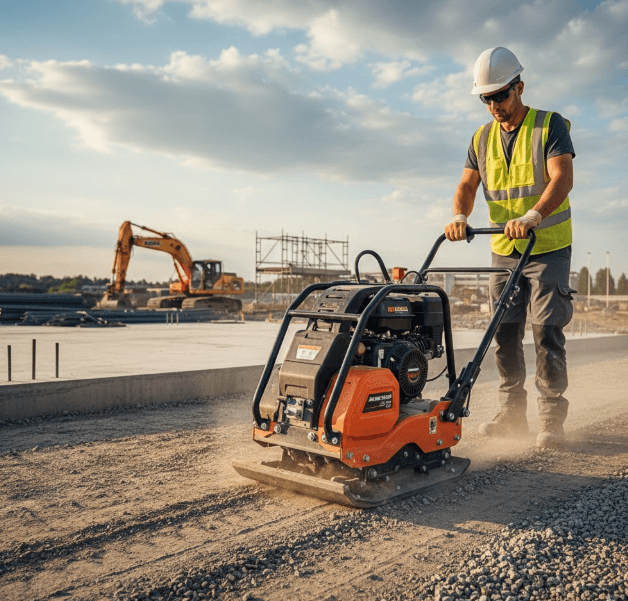
The Importance of Soil Density in Construction
Before concrete is poured or paving materials are installed, the ground beneath the project must be properly prepared. Soil and aggregate materials naturally contain small pockets of air that reduce stability. If these materials are left loose, they may compress later under weight, causing surfaces to sink or crack. Plate compactors help eliminate these air pockets by pressing and vibrating the material until the particles pack tightly together. This process increases soil density and improves the load-bearing strength of the ground. When the base layer is compacted correctly, it provides a stable platform for structures, roadways, and hardscape installations.
Common Applications for Plate Compactors
Plate compactors are widely used across many types of construction and landscaping work. Their ability to compress granular materials makes them ideal for preparing base layers before major installations. Contractors commonly use compactors when preparing areas for concrete slabs, driveways, sidewalks, retaining walls, and patio installations. They are also frequently used in road construction projects where gravel or crushed stone must be compacted before asphalt is applied. In landscaping work, compactors help stabilize ground before installing pavers, walkways, or outdoor features. By creating a solid base, compactors help ensure the finished surface remains level and durable over time.
Features That Improve Compaction Performance
Modern plate compactors are designed to maximize efficiency and usability on busy job sites. One of the most important components is the vibration system, which delivers strong downward force through a heavy steel base plate. This vibrating plate allows the machine to compact large areas quickly while maintaining consistent pressure on the ground. Many compactors are also designed with compact frames and balanced weight distribution, making them easier for operators to guide across the work surface. Protective frames and reinforced housings help shield internal components from debris, dirt, and impacts commonly encountered on construction sites.
Operating Compactors Safely and Effectively
Proper operation is important to achieve consistent compaction results. Operators typically guide the machine slowly across the material in overlapping passes to ensure even compression across the entire area. Working in multiple passes helps ensure the soil reaches the desired density. If necessary, contractors may add moisture to the material before compacting, which helps certain soils bind together more effectively. Maintaining steady machine movement and avoiding excessive speed helps the compactor apply consistent force to the ground, resulting in better compaction performance.
Reliable Equipment for Site Preparation
Compaction equipment plays a vital role in nearly every construction project. A properly compacted base layer helps protect the structural integrity of roads, foundations, and paved surfaces. By preparing stable ground conditions, compactors reduce the risk of settling, cracking, and costly repairs in the future. Contractors rely on dependable equipment to perform this important step efficiently. When plate compactors are maintained and operated properly, they remain valuable tools for preparing job sites, improving project durability, and supporting successful construction outcomes.